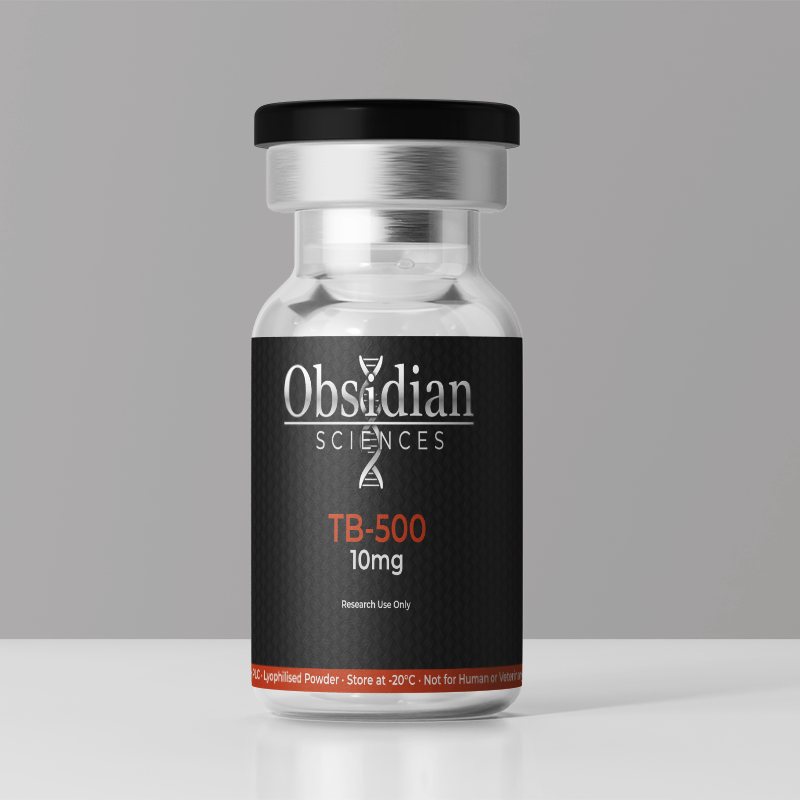
TB-500 is a synthetic peptide analogue of Thymosin Beta-4 (Tbeta4), a naturally occurring 43-amino-acid peptide found in virtually all human and animal cells with the exception of red blood cells. Thymosin Beta-4 was originally isolated from calf thymus tissue and is one of the most abundant intracellular peptides, playing a central role in actin polymerisation and cytoskeletal organisation.
TB-500 represents the active region of the full Thymosin Beta-4 molecule, containing the actin-binding domain responsible for the biological activity attributed to the parent peptide.
A foundational 1999 NIH study reported that Thymosin Beta-4 increased re-epithelialisation by up to 61% at 7 days post-wounding in a rat full-thickness wound model, with increased collagen deposition, angiogenesis, and keratinocyte migration observed.
Subsequent preclinical research has investigated TB-500 across models of wound healing, cardiac repair following ischaemic injury, inflammatory modulation, and cell migration. A comprehensive 2021 review from the University of Pecs explored how systemic TB4 administration can reactivate dormant embryonic epicardial progenitor cells in adult mammals.
Analytical studies have characterised TB-500’s metabolic profile, identifying serial C-terminal cleavage producing metabolites including the Ac-LKKTE fragment, which appears linked to the wound-healing activity attributed to the parent compound. A WADA-commissioned study (2023) identified the N-terminal acetylated 17-23 segment (Ac-LKKTETQ) as an active fragment.
A registered Phase II clinical trial (NCT00832091) investigated Thymosin Beta-4 in patients with chronic venous stasis ulcers, reporting safety, tolerability, and findings relevant to skin regeneration research.
For In-Vitro Research Use Only. Not for human consumption, veterinary use, or clinical application. No dosing guidance is provided or implied.
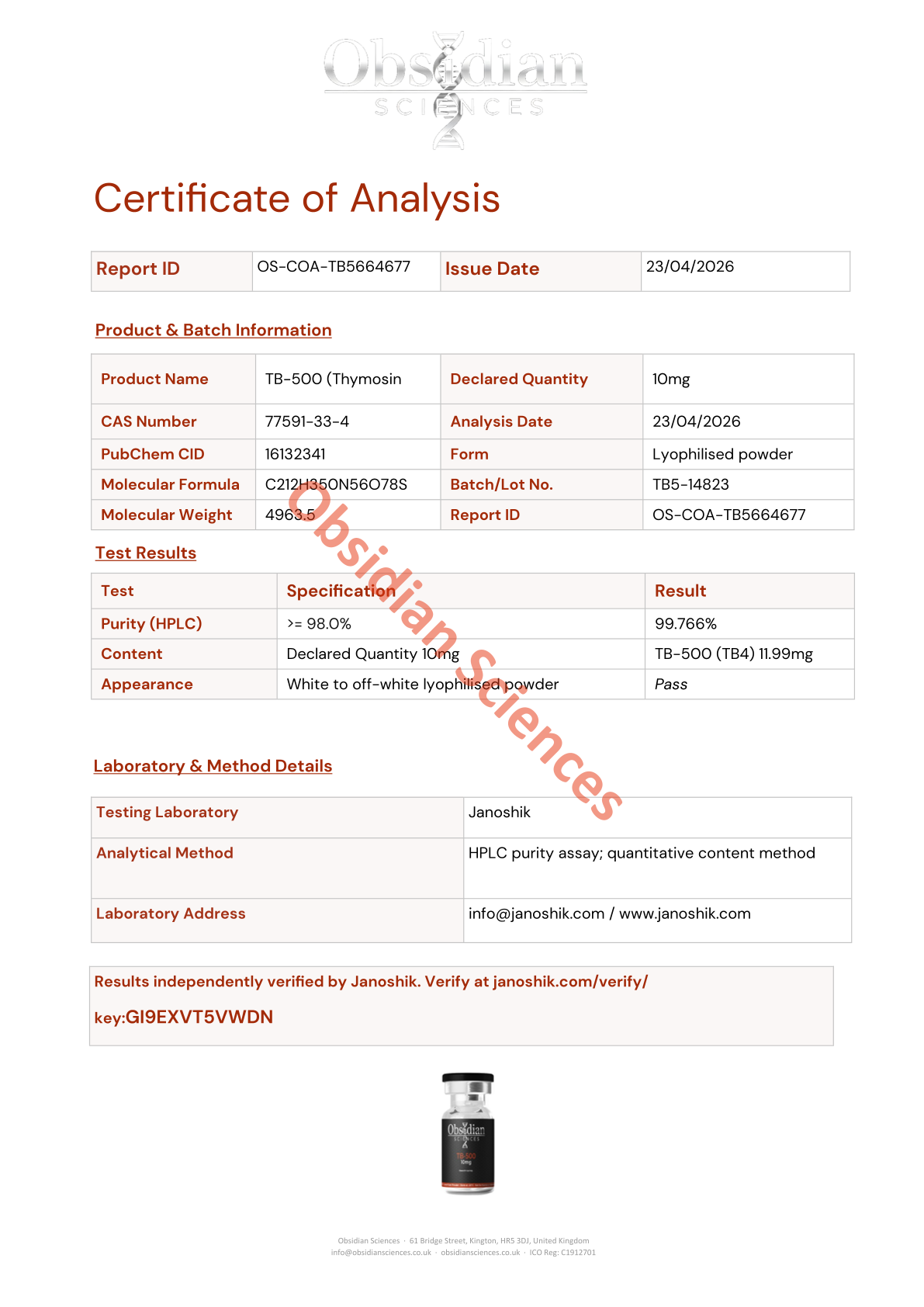
| CAS Number | 77591-33-4 |
| Molecular Formula | C212H350N56O78S |
| Molecular Weight | 4963.44 g/mol |
| Purity | >=98% HPLC |
| Form | Lyophilised powder |
| Vial Size | 10mg |
| Storage | -20C (lyophilised); 2-8C (reconstituted) |
Peer-reviewed published research underpins every compound in our catalogue. All products are supplied strictly for research use only.
Related products