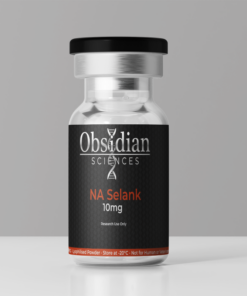
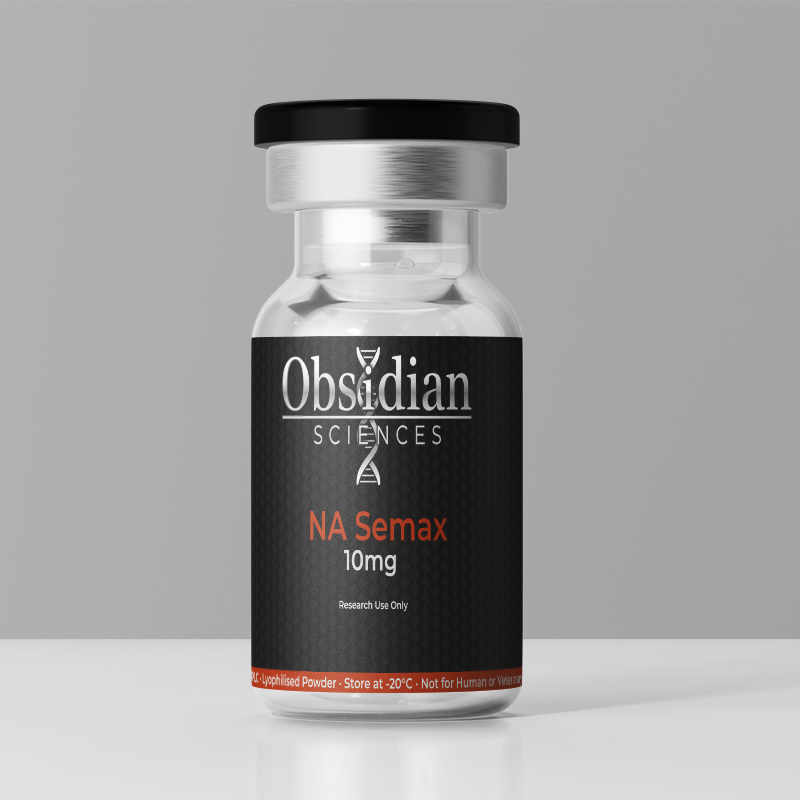
NA Semax 10mg
£27.99
NA Semax – 10mg lyophilised powder, research grade. Synthetic heptapeptide derived from ACTH/MSH neuropeptide family for in-vitro research use only.
5 in stock
For In-Vitro Research Use Only. Not for human consumption, veterinary use, or clinical application. No dosing guidance is provided or implied.
Semax is a synthetic heptapeptide consisting of a fragment of adrenocorticotropic hormone (ACTH 4-7), the sequence Met-Glu-His-Phe, extended with the tripeptide Pro-Gly-Pro to improve metabolic stability. It was developed at the Institute of Molecular Genetics of the Russian Academy of Sciences.
The N-Acetyl (NA) form provides enhanced resistance to aminopeptidase degradation, increasing the peptide’s effective half-life in biological systems.
Preclinical and clinical research has investigated Semax in models of neuroprotection, cognitive function, and neurovascular regulation. A 2025 study reported improved cognitive function in a mouse model of Alzheimer’s disease together with reduced amyloid load in the brain.
Mechanistic studies have identified multiple pathways under investigation including BDNF upregulation, suppression of MMP-9 and JNK inflammatory signalling, activation of CREB-mediated neuronal recovery pathways, and inhibition of amyloid-beta fibrillogenesis.
A 2025 publication in the British Journal of Pharmacology identified a mechanism involving the mu-opioid receptor gene Oprm1 in spinal cord injury recovery models, complementing the existing body of Russian-origin studies.
Semax’s BDNF-stimulating activity has been reported with neurotrophin mRNA levels elevated for 24-72 hours post-administration, and VEGF plus angiogenesis-related gene upregulation has been documented following focal brain ischaemia models.
For In-Vitro Research Use Only. Not for human consumption, veterinary use, or clinical application. No dosing guidance is provided or implied.
| Sequence | Met-Glu-His-Phe-Pro-Gly-Pro (N-Acetylated) |
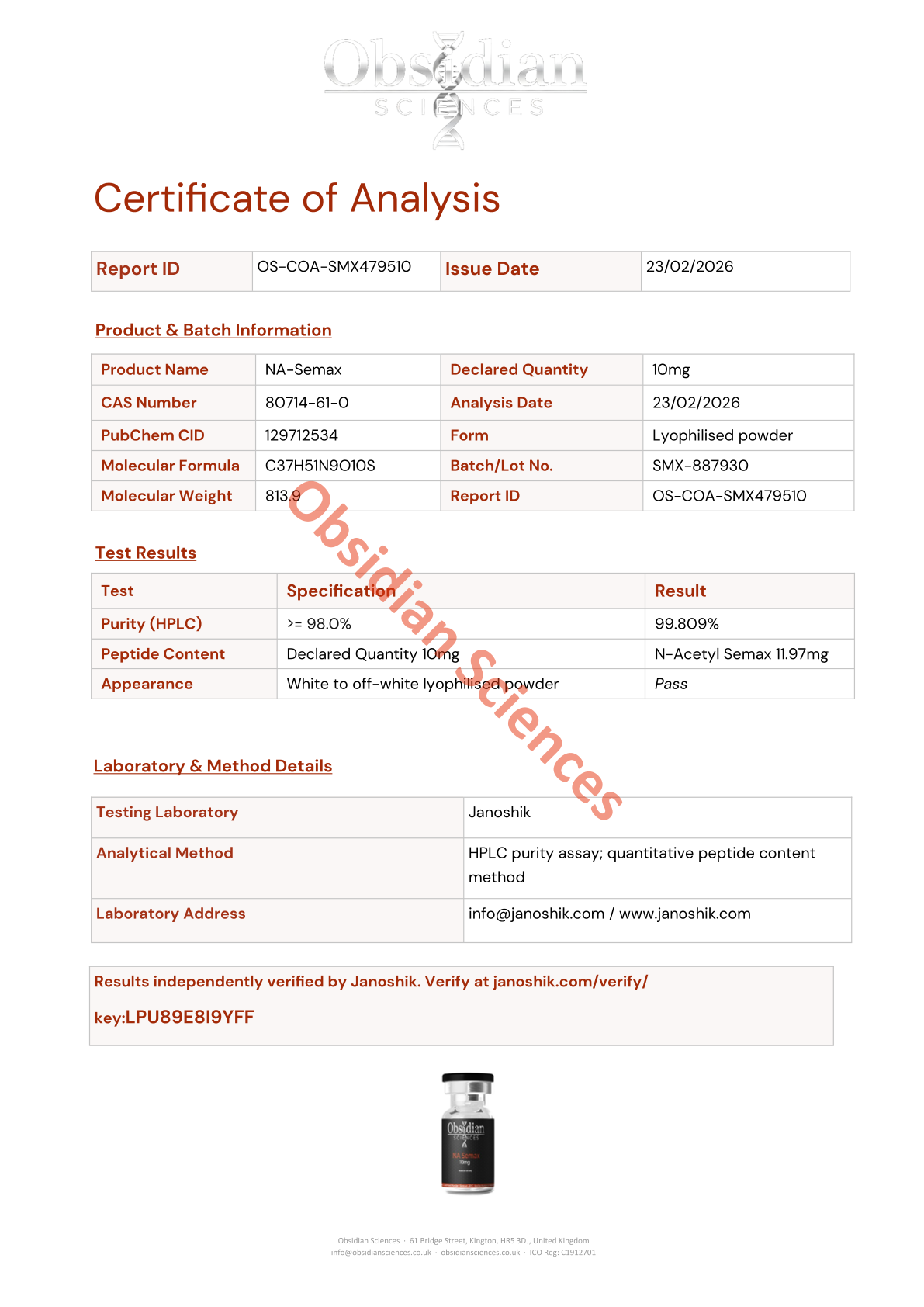
| CAS Number | 80714-61-0 |
| Molecular Formula | C39H53N9O10S |
| Molecular Weight | 844.96 g/mol |
| Purity | >=98% HPLC |
| Form | Lyophilised powder |
| Vial Size | 10mg |
| Storage | -20C (lyophilised); 2-8C (reconstituted) |
Peer-reviewed published research underpins every compound in our catalogue. All products are supplied strictly for research use only.
Related products