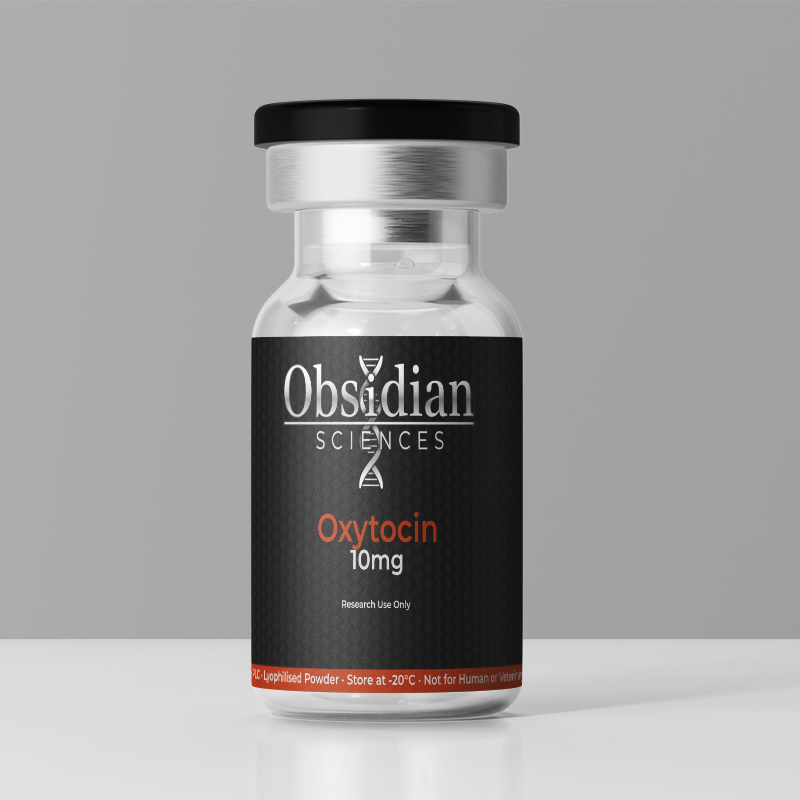
Oxytocin is a naturally occurring cyclic nonapeptide produced in the hypothalamus and released by the posterior pituitary gland. It is one of the most extensively studied neuropeptides in mammalian biology, with a research history spanning over a century since its identification by Sir Henry Dale in 1906.
The peptide contains a disulphide bridge between cysteine residues at positions 1 and 6, forming the characteristic six-residue ring structure essential for receptor binding and biological activity.
Oxytocin acts primarily through the oxytocin receptor (OXTR), a G-protein-coupled receptor expressed in the brain, uterus, mammary gland, cardiovascular system, and other peripheral tissues. OXTR activation triggers intracellular calcium signalling cascades via the Gq/11-PLC-IP3 pathway.
Preclinical research has investigated oxytocin across models of social behaviour, stress response, pain perception, cardiovascular function, and metabolic regulation. Studies have reported GABAergic and serotonergic pathway interactions as well as inflammatory cytokine modulation in experimental systems.
Pharmaceutical-grade oxytocin has been used clinically for decades under regulatory approval for specific obstetric indications. This research-grade product is supplied exclusively for in-vitro and preclinical research applications.
For In-Vitro Research Use Only. Not for human consumption, veterinary use, or clinical application. No dosing guidance is provided or implied.
| Sequence | CYIQNCPLG-NH2 (disulphide bridge Cys1-Cys6) |
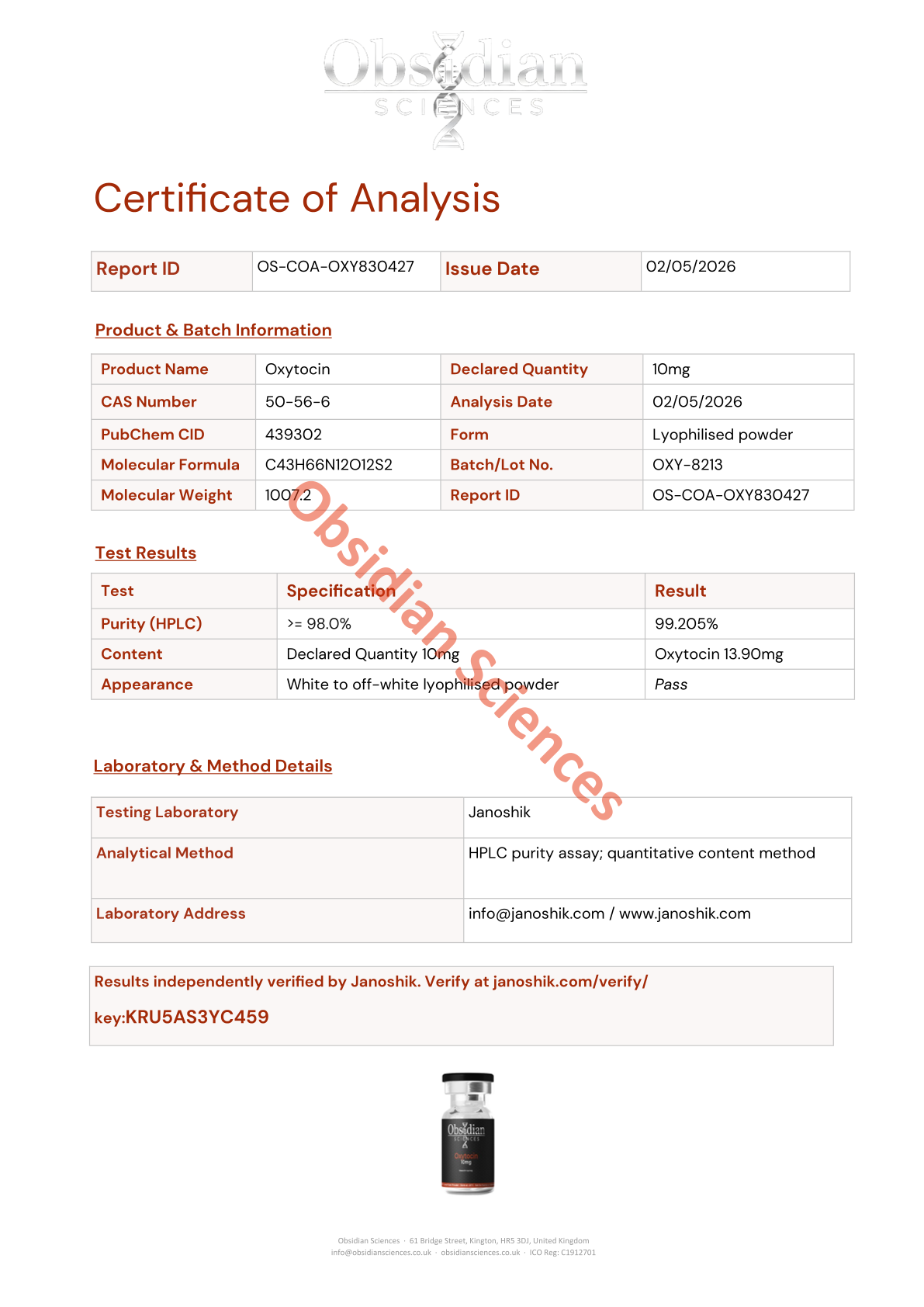
| CAS Number | 50-56-6 |
| Molecular Formula | C43H66N12O12S2 |
| Molecular Weight | 1007.19 g/mol |
| Purity | >=98% HPLC |
| Form | Lyophilised powder |
| Vial Size | 10mg |
| Storage | -20C (lyophilised); 2-8C (reconstituted) |
Peer-reviewed published research underpins every compound in our catalogue. All products are supplied strictly for research use only.
Related products