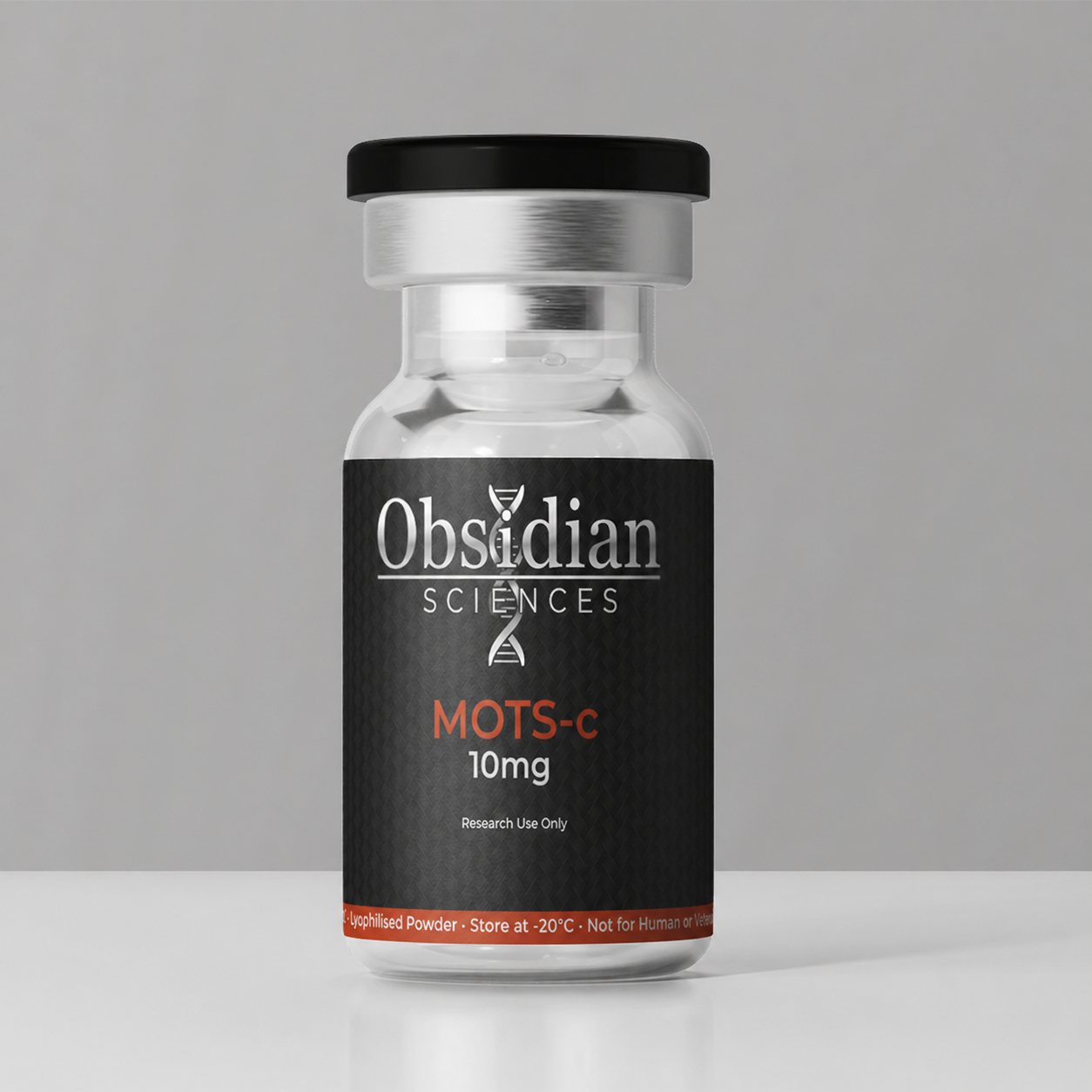

MOTS-c (Mitochondrial Open Reading Frame of the 12S rRNA-c) is a 16-amino-acid peptide encoded within the mitochondrial genome, specifically derived from a small open reading frame within the 12S rRNA gene. First characterised in 2015 by researchers at the University of Southern California, MOTS-c represents a member of the expanding family of mitochondrial-derived peptides (MDPs) — bioactive molecules that function as retrograde signals from mitochondria to the nucleus and other cellular compartments.
MOTS-c has been identified in plasma and multiple tissues, suggesting dual roles as both an intracellular signalling molecule and a circulating mitochondrial hormone (mitokine). Its endogenous expression declines with age, paralleling age-associated metabolic dysfunction.
Preclinical research has examined MOTS-c across several key areas. In metabolic regulation, studies have demonstrated that MOTS-c activates AMPK signalling, enhances glucose uptake in skeletal muscle, and improves insulin sensitivity in diet-induced obesity models. A 2016 study in Cell Metabolism showed that MOTS-c treatment prevented age-dependent and high-fat-diet-induced insulin resistance in mice.
Under conditions of metabolic stress, MOTS-c has been shown to translocate to the nucleus where it regulates adaptive gene expression through interaction with stress-responsive transcription factors. This nuclear translocation mechanism was characterised in a 2018 study demonstrating MOTS-c-mediated regulation of the nuclear genome in response to cellular stress.
Physical exercise has been shown to increase endogenous MOTS-c expression. A 2020 study in skeletal muscle demonstrated that exercise-induced MOTS-c translocation to the nucleus activates antioxidant response element (ARE) pathways, suggesting a role in exercise-mediated metabolic adaptation.
Research applications include studies of mitochondrial-nuclear communication, AMPK-dependent metabolic signalling, glucose homeostasis, and age-related metabolic decline in controlled in-vitro and preclinical systems.
⚗ For In-Vitro Research Use Only. Not for human consumption, veterinary use, or clinical application. No dosing guidance is provided or implied.
| Sequence | MRWQEMGYIFYPRKLR |
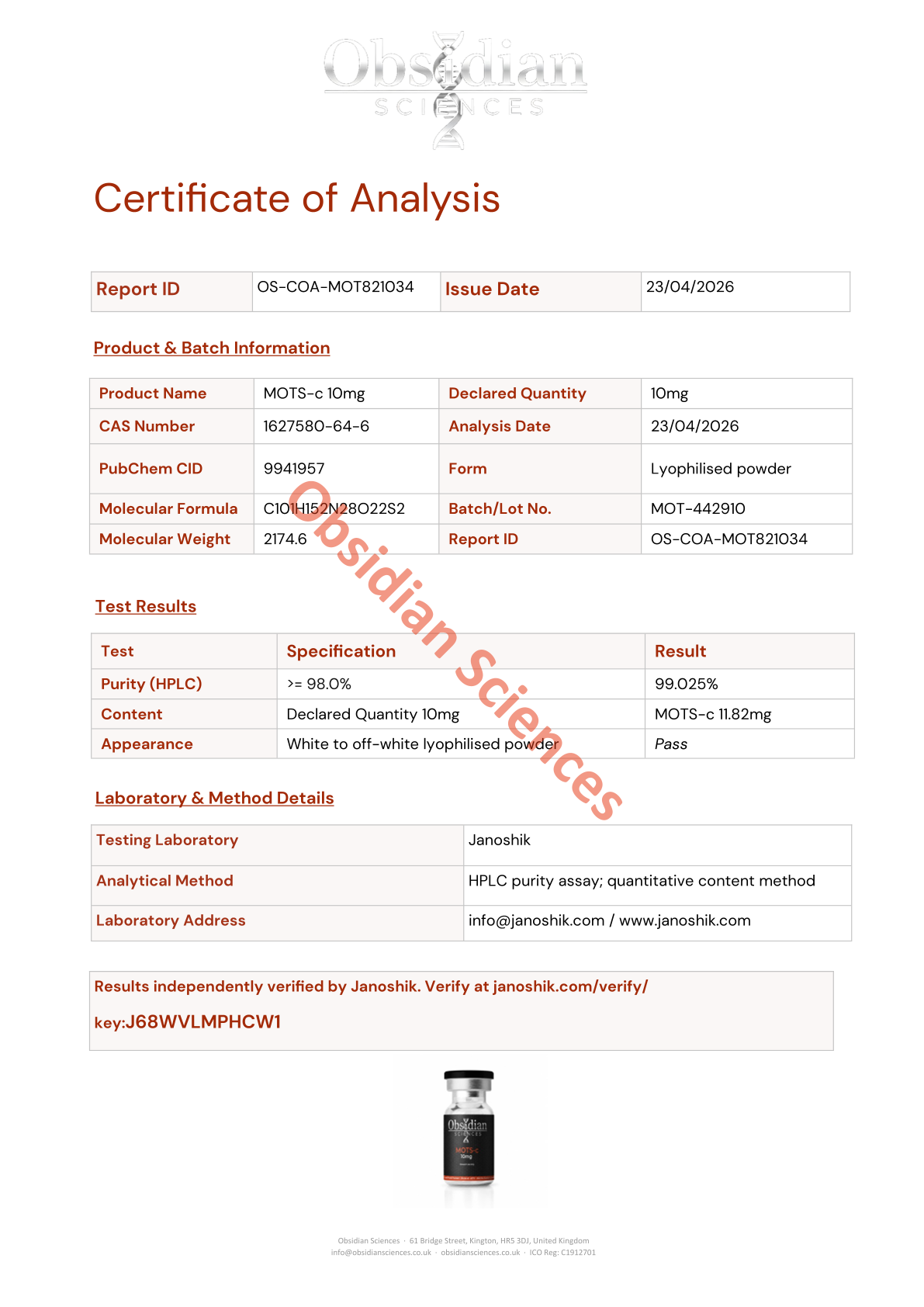
| CAS Number | 1627580-64-6 |
| Molecular Formula | C₁₀₁H₁₅₂N₂₈O₂₂S₂ |
| Molecular Weight | 2174.64 g/mol |
| Purity | ≥98% HPLC |
| Form | Lyophilised powder |
| Vial Size | 10mg |
| Storage | -20°C (lyophilised); 2-8°C (reconstituted) |
Peer-reviewed published research underpins every compound in our catalogue. All products are supplied strictly for research use only.
Related products