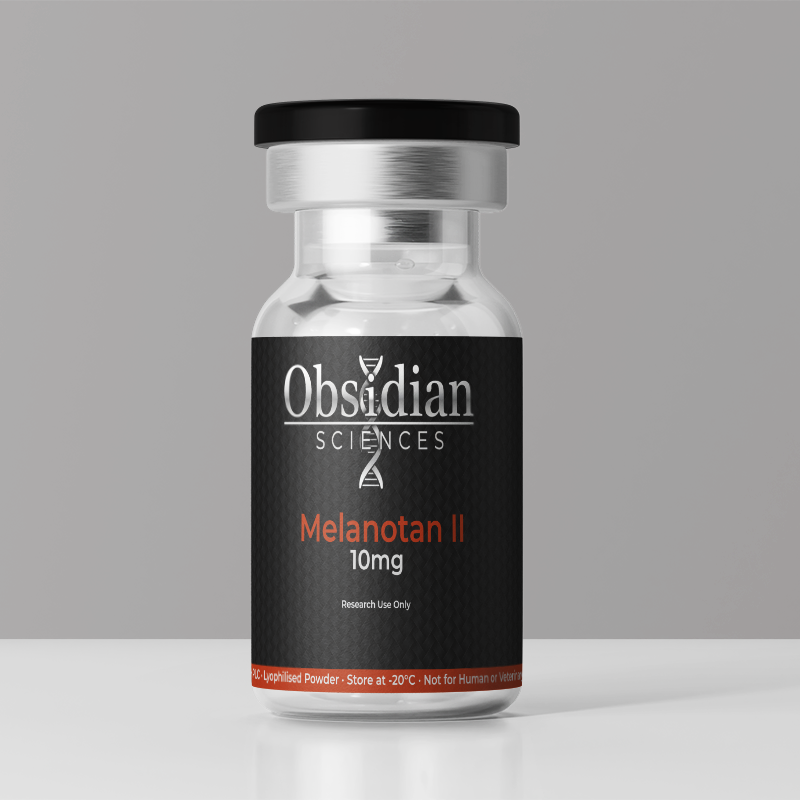
Melanotan II 10mg
£24.99
Melanotan II – 10mg lyophilised powder, research grade. Synthetic cyclic melanocortin peptide for in-vitro research use only.
Out of stock
For In-Vitro Research Use Only. Not for human consumption, veterinary use, or clinical application. No dosing guidance is provided or implied.
Melanotan II is a synthetic cyclic heptapeptide analogue of alpha-melanocyte-stimulating hormone (alpha-MSH). It was developed at the University of Arizona as a shorter, more potent derivative of the linear Melanotan I molecule. The cyclisation of the peptide backbone significantly increases metabolic stability and receptor binding affinity compared to the native linear alpha-MSH.
Melanotan II is a non-selective melanocortin receptor agonist with activity across multiple receptor subtypes including MC1R, MC3R, MC4R, and MC5R. This broad receptor profile distinguishes it from Melanotan I, which has preferential activity at MC1R.
Preclinical research has investigated Melanotan II in models of melanogenesis, melanocortin receptor binding and signalling, appetite regulation via MC4R, and sexual function via central melanocortin pathways. The MC4R activity of Melanotan II led to the development of Bremelanotide (PT-141), a related compound that received FDA approval for a specific clinical indication.
Research applications focus on melanocortin receptor pharmacology, structure-activity relationship studies, and cell-based assay systems examining receptor activation and downstream signalling cascades.
For In-Vitro Research Use Only. Not for human consumption, veterinary use, or clinical application. No dosing guidance is provided or implied.
| Sequence | Ac-Nle-c[Asp-His-D-Phe-Arg-Trp-Lys]-NH2 |
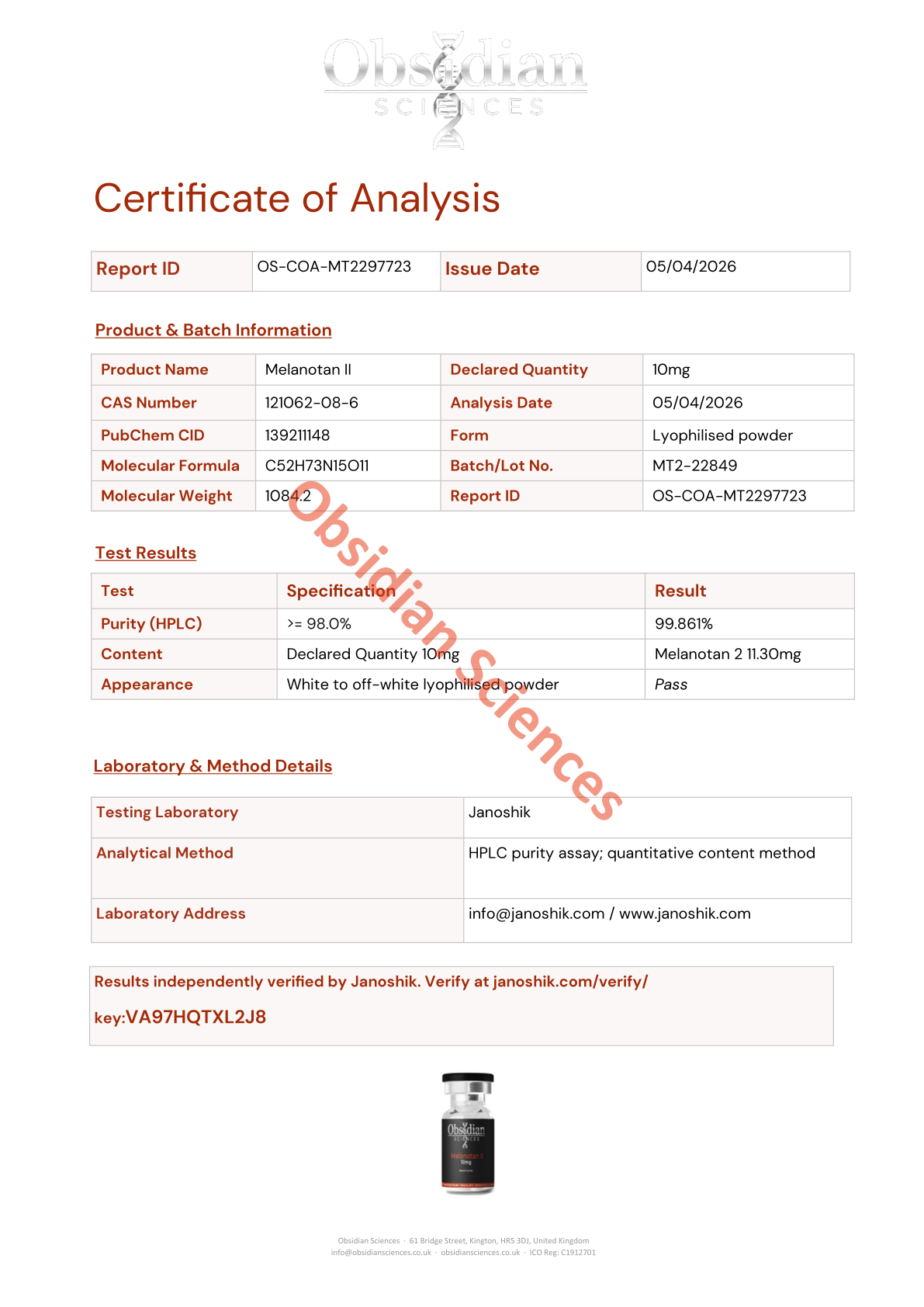
| CAS Number | 121062-08-6 |
| Molecular Formula | C50H69N15O9 |
| Molecular Weight | 1024.18 g/mol |
| Purity | >=98% HPLC |
| Form | Lyophilised powder |
| Vial Size | 10mg |
| Storage | -20C (lyophilised); 2-8C (reconstituted) |
Peer-reviewed published research underpins every compound in our catalogue. All products are supplied strictly for research use only.
Related products