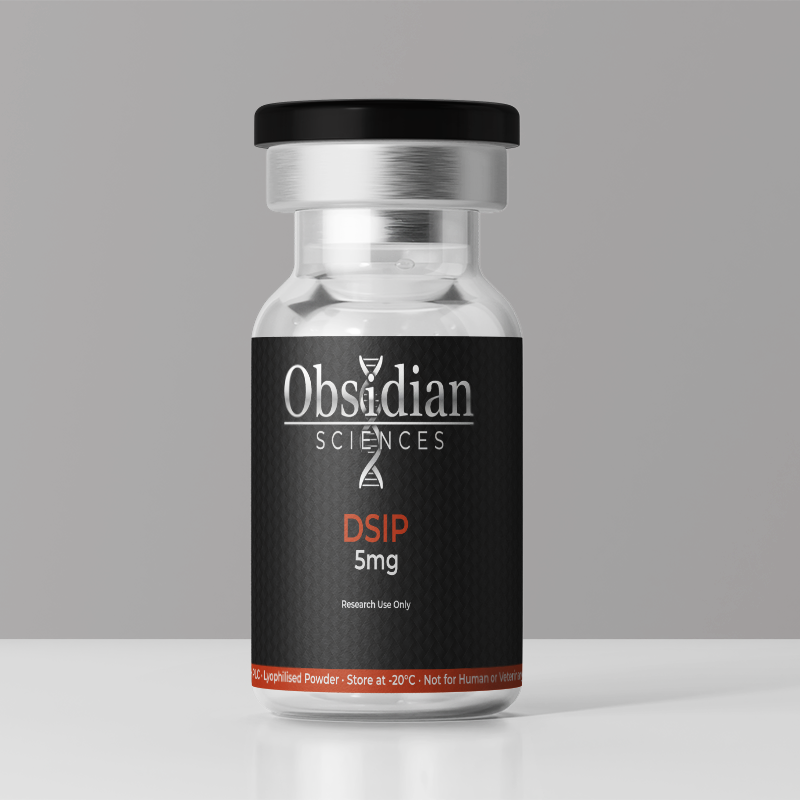
DSIP (Delta Sleep-Inducing Peptide) is a naturally occurring neuropeptide first isolated from rabbit brain tissue in 1977 by Schoenenberger and Monnier. It consists of 9 amino acids (WAGGDASGE) and is classified as an amphiphilic peptide with the ability to cross biological membranes.
DSIP has been identified in hypothalamic and pituitary tissues and is detectable in human blood plasma, where it exists in both free and bound forms. Its name derives from early research demonstrating delta-wave electroencephalographic (EEG) activity in rabbit models.
Preclinical research has investigated DSIP across multiple neuroendocrine models, including studies of circadian rhythm regulation, stress hormone modulation (particularly ACTH and cortisol pathways), and opioid receptor interactions. DSIP has also been examined in models of pain perception, with studies reporting modulation of met-enkephalin levels.
The peptide’s mechanism of action remains an active area of investigation. No specific DSIP receptor has been conclusively identified, and the observed effects may involve interactions with multiple receptor systems.
For In-Vitro Research Use Only. Not for human consumption, veterinary use, or clinical application. No dosing guidance is provided or implied.
| Sequence | WAGGDASGE |
| CAS Number | 62568-57-4 |
| Molecular Formula | C35H48N10O15 |
| Molecular Weight | 848.81 g/mol |
| Purity | >=98% HPLC |
| Form | Lyophilised powder |
| Vial Size | 5mg |
| Storage | -20C (lyophilised); 2-8C (reconstituted) |
Peer-reviewed published research underpins every compound in our catalogue. All products are supplied strictly for research use only.
Related products