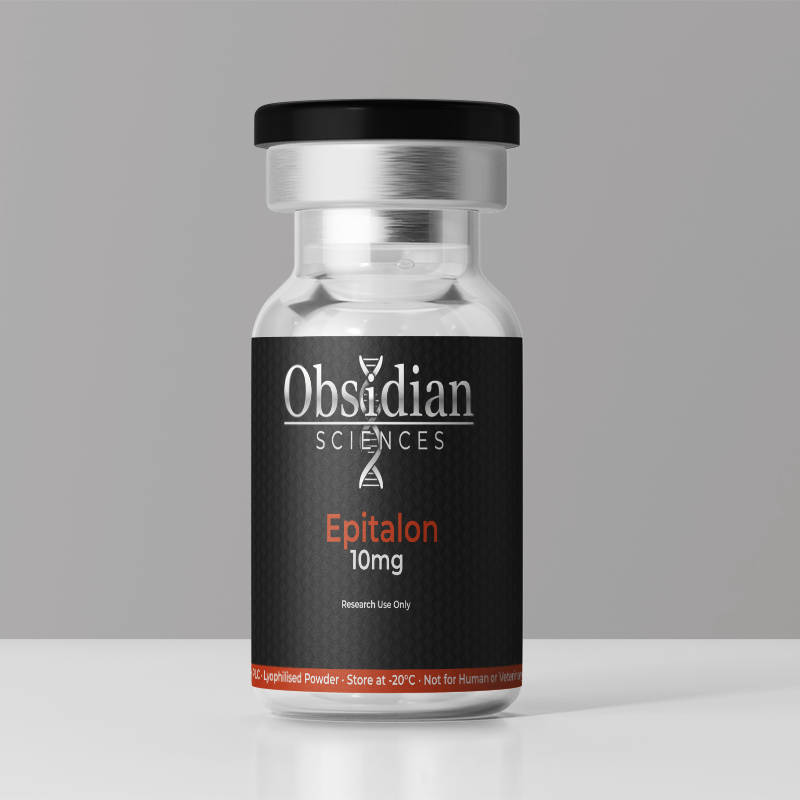


Epitalon (also written Epithalon) is a synthetic tetrapeptide with the sequence Ala-Glu-Asp-Gly (AEDG). It was developed through fractionation of Epithalamin, a bovine pineal gland extract, by Professor Vladimir Khavinson at the St. Petersburg Institute of Bioregulation and Gerontology.
Epitalon belongs to a class of compounds known as bioregulatory peptides, short-chain peptides investigated for their ability to modulate gene expression in specific tissue types.
The primary area of research interest is Epitalon’s reported interaction with telomerase, the enzyme responsible for maintaining telomere length during cell division. In vitro studies using human somatic cell cultures have reported increased telomerase activity and telomere elongation following Epitalon exposure. These observations have positioned Epitalon as a research tool in studies of cellular senescence, genomic stability, and age-associated gene expression changes.
Additional preclinical research has examined Epitalon in models of circadian rhythm regulation, particularly melatonin synthesis pathways, immune function modulation, retinal degeneration, and oxidative stress. Animal model studies have reported geroprotective and antimutagenic properties across multiple tissue types.
For In-Vitro Research Use Only. Not for human consumption, veterinary use, or clinical application. No dosing guidance is provided or implied.
| Sequence | AEDG |
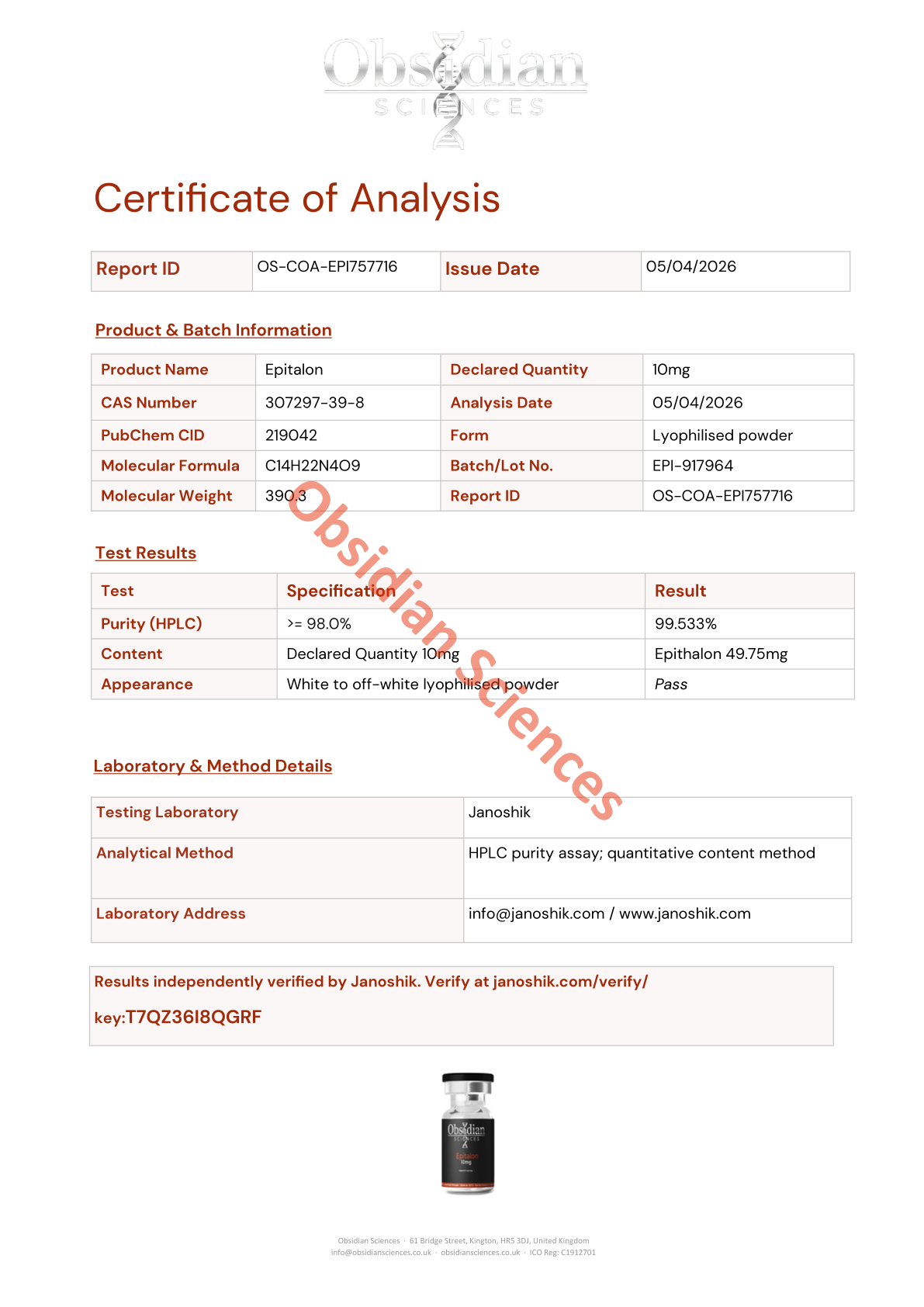
| CAS Number | 307297-39-8 |
| Molecular Formula | C14H22N4O9 |
| Molecular Weight | 390.35 g/mol |
| Purity | >=98% HPLC |
| Form | Lyophilised powder |
| Vial Size | 10mg |
| Storage | -20C (lyophilised); 2-8C (reconstituted) |
Peer-reviewed published research underpins every compound in our catalogue. All products are supplied strictly for research use only.
Related products