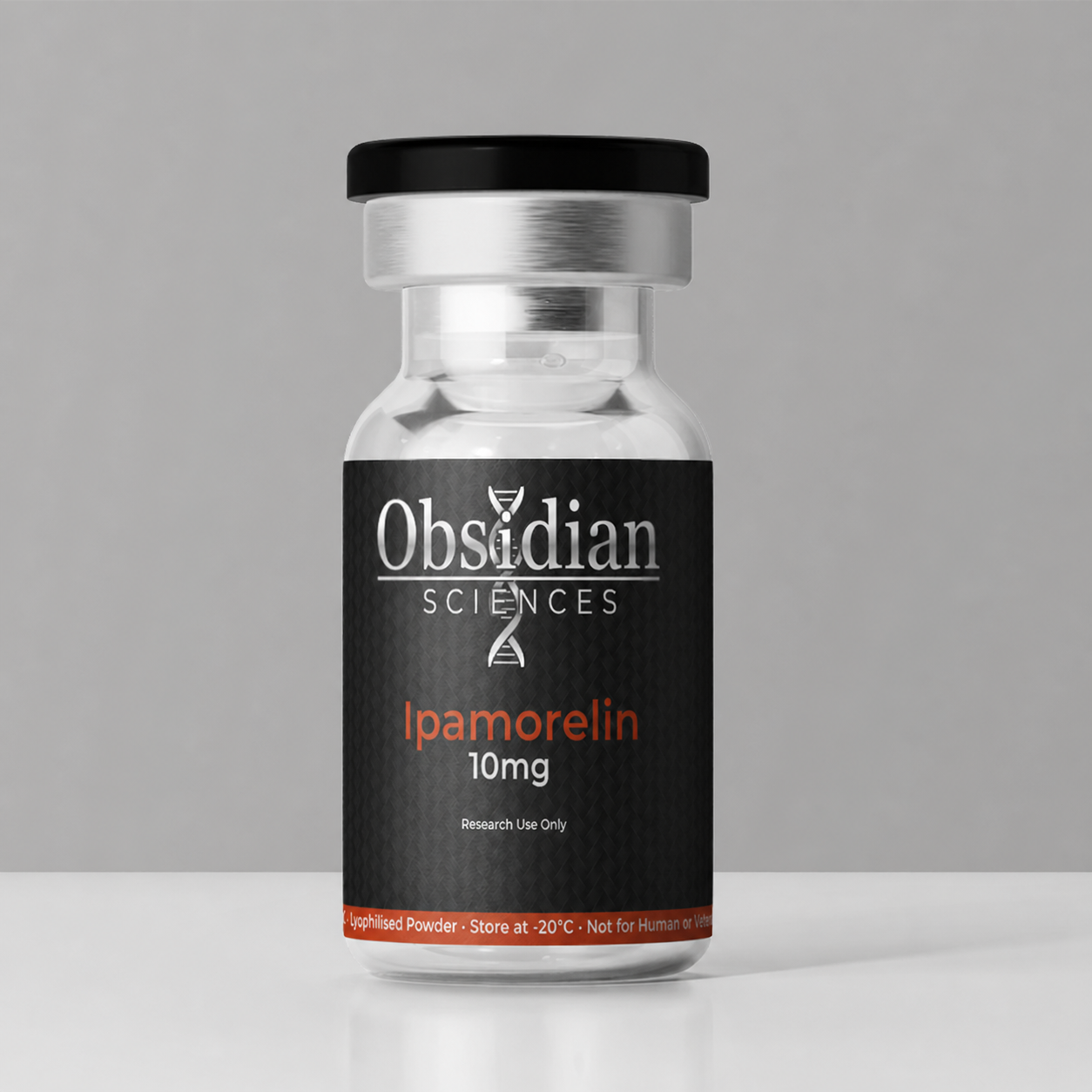
Ipamorelin 10mg
£19.99
Ipamorelin — 10mg lyophilised powder, research grade. Selective growth hormone secretagogue for in-vitro research use only.
Out of stock
For In-Vitro Research Use Only. Not for human consumption, veterinary use, or clinical application. No dosing guidance is provided or implied.
Ipamorelin is a synthetic pentapeptide growth hormone secretagogue (GHS) that selectively binds to the ghrelin receptor (GHS-R1a). It was developed as a highly selective analogue designed to stimulate growth hormone (GH) release from the anterior pituitary without significantly affecting levels of cortisol, prolactin, or ACTH — distinguishing it from earlier, less selective GH secretagogues such as GHRP-6 and GHRP-2.
The peptide’s structure consists of five amino acids (Aib-His-D-2-Nal-D-Phe-Lys-NH₂) and exhibits a molecular weight of 711.85 Da. Its selectivity profile arises from its specific binding characteristics at the GHS-R1a receptor, producing a clean, dose-dependent GH release without the broader endocrine perturbations observed with other ghrelin mimetics.
A Phase I human clinical trial published in the Journal of Clinical Endocrinology & Metabolism (2004) demonstrated that intravenous administration of Ipamorelin significantly elevated GH levels in healthy adults in a dose-dependent manner, confirming its selectivity and tolerability in human subjects. The study established Ipamorelin as the first GHS-R1a agonist with true GH-specific release properties.
In preclinical models, Ipamorelin has been investigated for effects on bone mineral density, body composition, and GH pulsatility. Studies in aged animal models have examined whether targeted GH secretagogue activity can restore age-associated decline in GH axis function without the side effects associated with exogenous GH administration.
Research applications focus on GHS receptor pharmacology, structure-activity relationship studies comparing ghrelin mimetic selectivity profiles, and controlled investigations of GH-axis signalling in cell-based and animal model systems.
⚗ For In-Vitro Research Use Only. Not for human consumption, veterinary use, or clinical application. No dosing guidance is provided or implied.
| Sequence | Aib-His-D-2-Nal-D-Phe-Lys-NH₂ |
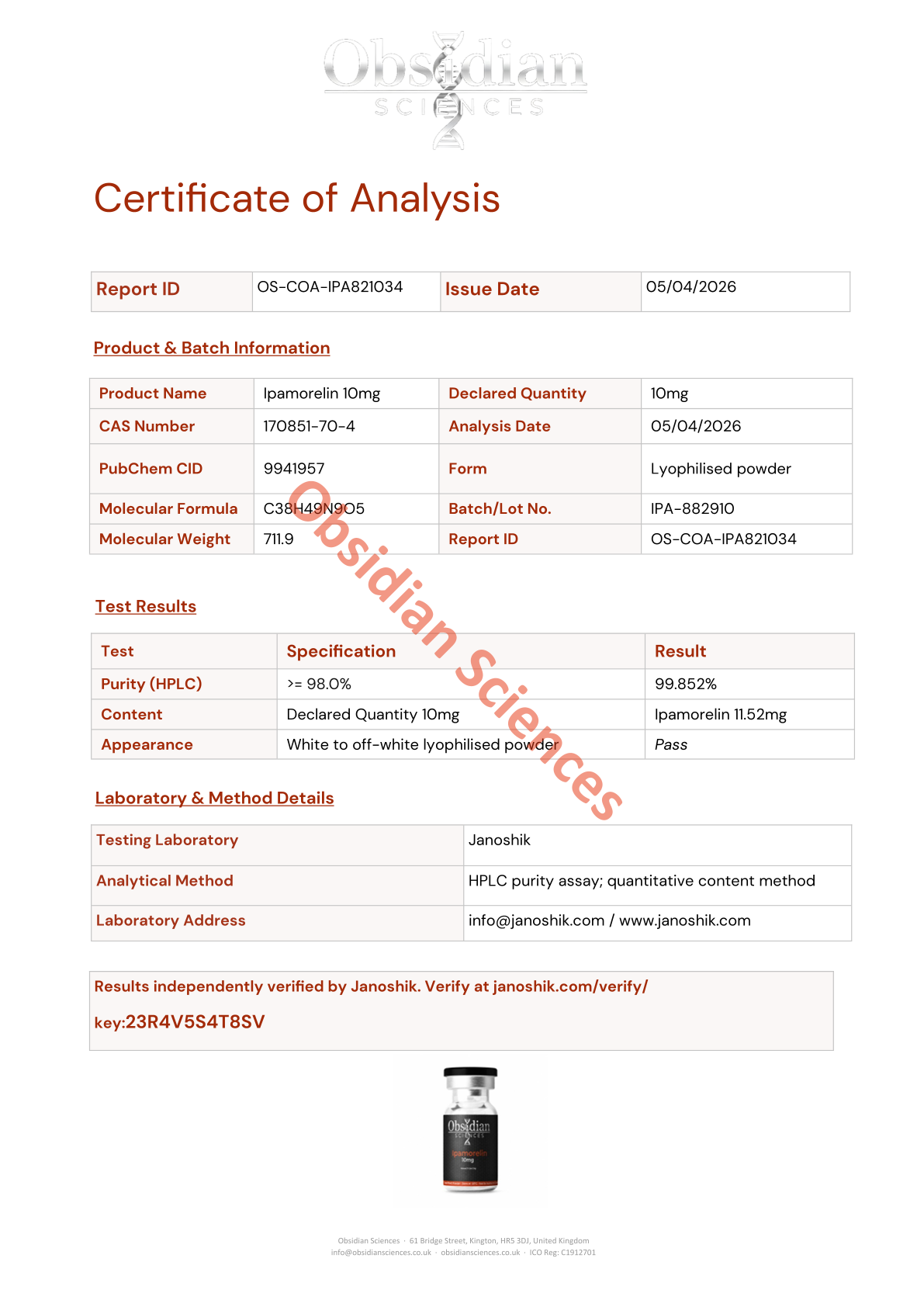
| CAS Number | 170851-70-4 |
| Molecular Formula | C₃₈H₄₉N₉O₅ |
| Molecular Weight | 711.85 g/mol |
| Purity | ≥98% HPLC |
| Form | Lyophilised powder |
| Vial Size | 10mg |
| Storage | -20°C (lyophilised); 2-8°C (reconstituted) |
Peer-reviewed published research underpins every compound in our catalogue. All products are supplied strictly for research use only.
Related products