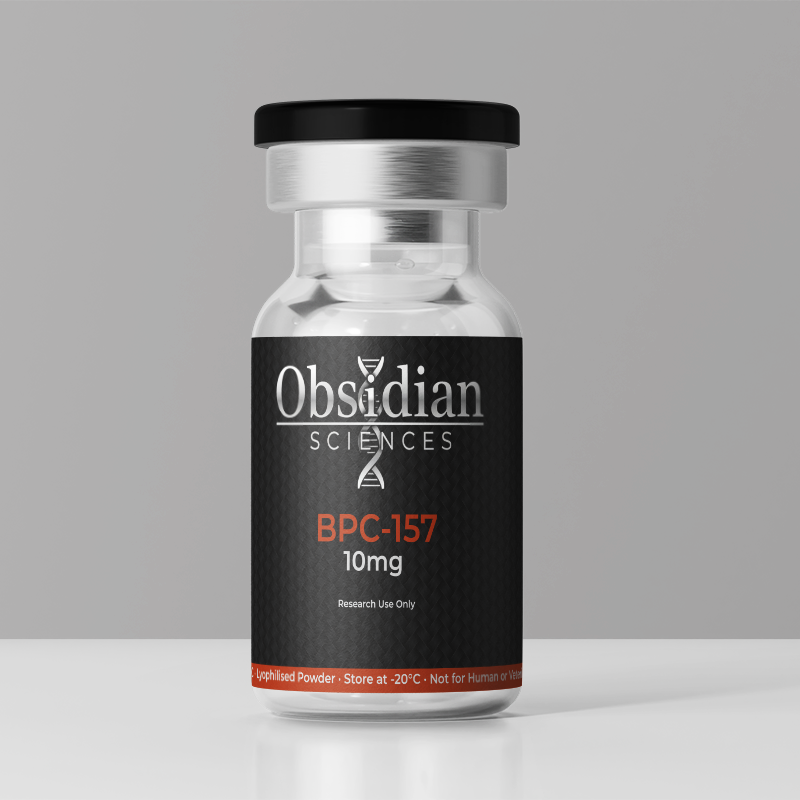
BPC-157 (Body Protection Compound-157) is a synthetic pentadecapeptide consisting of 15 amino acids derived from a partial sequence of human gastric juice protein. Its sequence (GEPPPGKPADDAGLV) is unique in that it does not share full homology with any known native protein, though it is classified as a fragment of the larger gastric protein.
BPC-157 is notable for its stability in human gastric juice, a property uncommon among peptides of this size, which has made it a subject of particular interest in preclinical research.
Preclinical studies have investigated BPC-157 across gastrointestinal, musculoskeletal, and neurological models. Identified mechanisms under investigation include modulation of the nitric oxide (NO) system, growth factor receptor expression changes including VEGFR2 and EGFR, activation of the FAK-paxillin pathway involved in cell migration, and normalisation of disrupted neurotransmitter signalling involving dopamine, serotonin, and GABA systems.
A 2025 systematic review of 36 studies (1993-2024) reported improved functional, structural, and biomechanical outcomes across muscle, tendon, ligament, and bone injury models, with no adverse effects observed in preclinical safety studies. BPC-157 was metabolised in the liver with a half-life under 30 minutes.
Human clinical trial data remains minimal. BPC-157 should be considered investigational.
For In-Vitro Research Use Only. Not for human consumption, veterinary use, or clinical application. No dosing guidance is provided or implied.
| Sequence | GEPPPGKPADDAGLV |
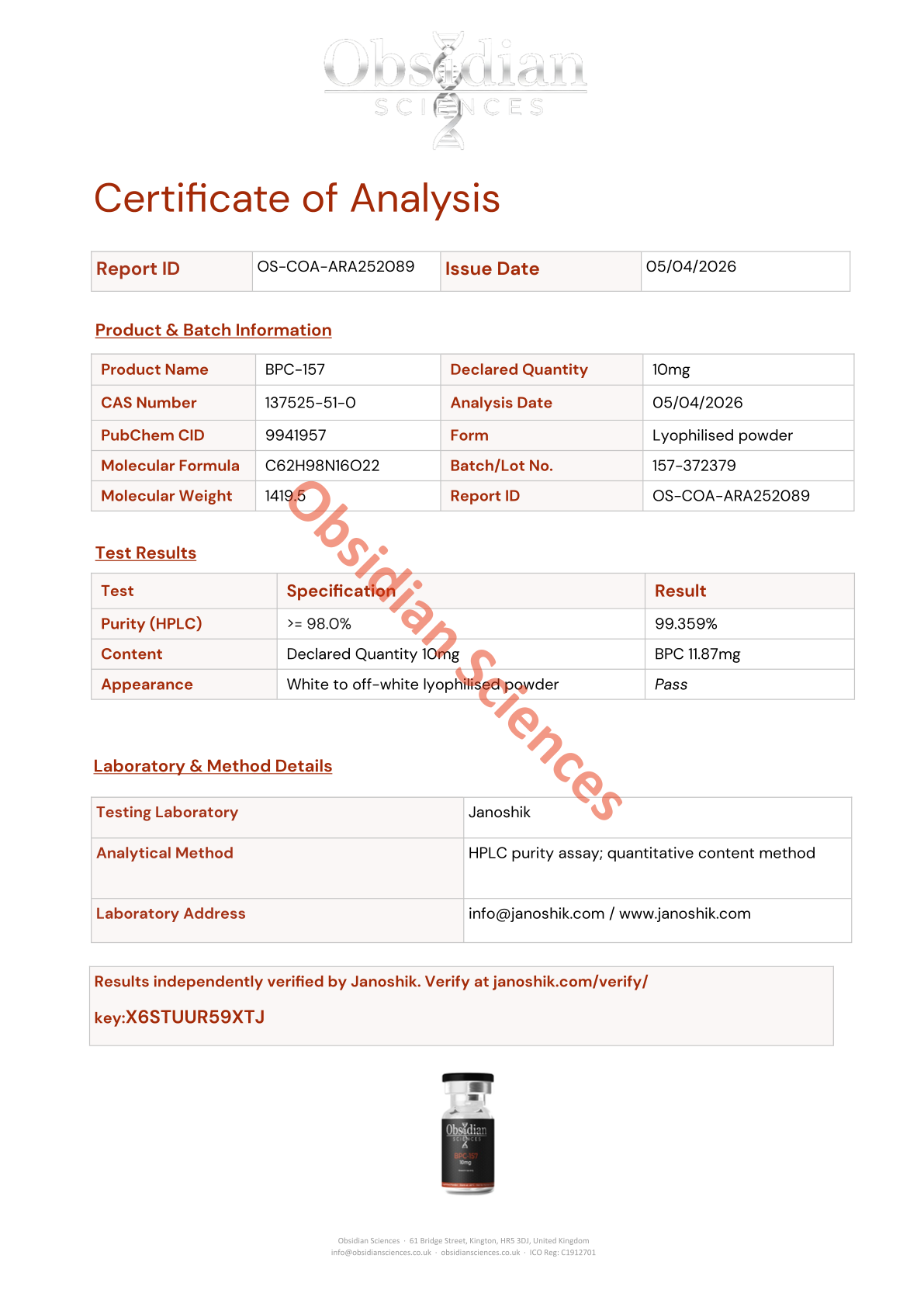
| CAS Number | 137525-51-0 |
| Molecular Formula | C62H98N16O22 |
| Molecular Weight | 1419.53 g/mol |
| Purity | >=98% HPLC |
| Form | Lyophilised powder |
| Vial Size | 10mg |
| Storage | -20C (lyophilised); 2-8C (reconstituted) |
Peer-reviewed published research underpins every compound in our catalogue. All products are supplied strictly for research use only.
Related products