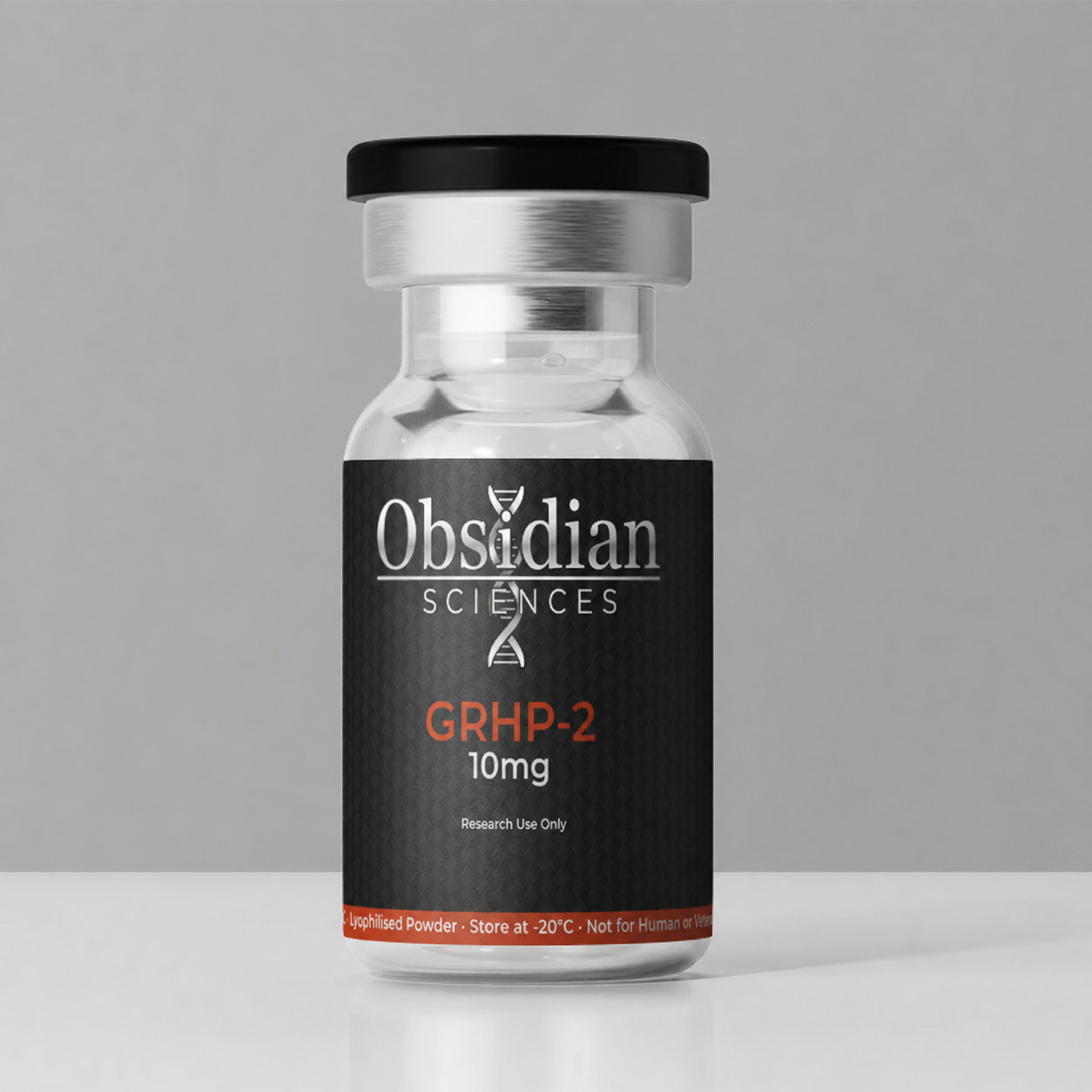
GHRP-2 10mg
£16.99
GHRP-2 (Pralmorelin) – 10mg lyophilised powder, research grade. Synthetic growth hormone secretagogue for in-vitro research use only.
10 in stock
For In-Vitro Research Use Only. Not for human consumption, veterinary use, or clinical application. No dosing guidance is provided or implied.
GHRP-2 (Growth Hormone-Releasing Peptide-2), also known as Pralmorelin, is a synthetic hexapeptide growth hormone secretagogue that binds to the ghrelin/growth hormone secretagogue receptor (GHS-R1a). It was the first of the growth hormone-releasing peptide class to be introduced into research and clinical evaluation.
GHRP-2 activates the GHS-R1a receptor on pituitary somatotroph cells, initiating Gq/11-coupled intracellular signalling cascades involving phospholipase C (PLC), inositol trisphosphate (IP3), diacylglycerol (DAG), and protein kinase C (PKC). This triggers calcium-dependent exocytosis of growth hormone-containing granules from the anterior pituitary. The mechanism is distinct from and complementary to that of growth hormone-releasing hormone (GHRH), which acts via the Gs/cAMP pathway.
Beyond pituitary signalling, preclinical research has investigated GHRP-2 across multiple biological domains. In yak models, GHRP-2 administration was associated with increased muscle protein deposition through upregulation of protein synthesis pathways and concurrent suppression of atrophy-related ubiquitin ligases (atrogin-1 and MuRF1). Cardiovascular studies in fetal cardiomyocyte cultures suggest GHRP-2 and its analogues may reduce apoptosis under ischaemic conditions. Immunological research indicates potential thymic rejuvenation effects, with GHRP-2 appearing to promote T-lymphocyte number and diversity in aged models.
GHRP-2 also demonstrates ghrelin-mimetic effects on appetite regulation, stimulating hypothalamic neuropeptide Y (NPY) and agouti-related peptide (AgRP) expression while suppressing alpha-melanocyte-stimulating hormone (alpha-MSH) signalling. A clinical study by Laferrere et al. (2005) reported that GHRP-2 increased food intake in human subjects at levels comparable to exogenous ghrelin administration.
GHRP-2 is approved in Japan as a diagnostic agent (under the name Pralmorelin) for the assessment of growth hormone secretion deficiency. Phase II clinical trials (Mericq et al., 1998) have evaluated oral GHRP-2 administration in growth hormone-deficient children over eight months, reporting sustained increases in GH and IGF-1 levels with good tolerability.
GHRP-2 is classified as a prohibited substance by the World Anti-Doping Agency (WADA) under category S2 (Peptide Hormones, Growth Factors, Related Substances, and Mimetics).
For In-Vitro Research Use Only. Not for human consumption, veterinary use, or clinical application. No dosing guidance is provided or implied.
| Sequence | H-D-Ala-D-2-Nal-Ala-Trp-D-Phe-Lys-NH2 |
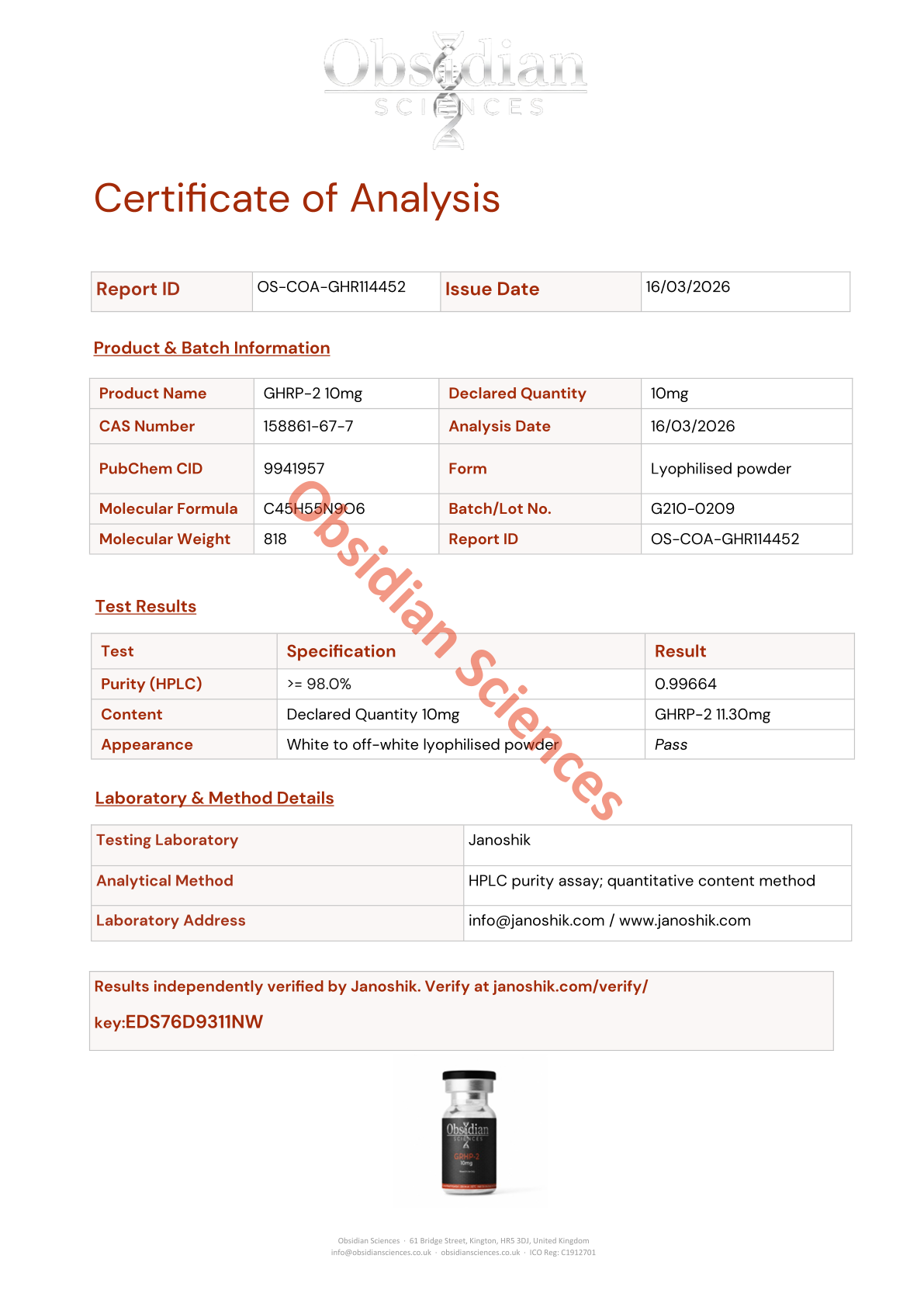
| CAS Number | 158861-67-7 |
| Molecular Formula | C45H55N9O6 |
| Molecular Weight | 817.97 g/mol |
| Purity | >=98% HPLC |
| Form | Lyophilised powder |
| Vial Size | 10mg |
| Storage | -20C (lyophilised); 2-8C (reconstituted) |
Peer-reviewed published research underpins every compound in our catalogue. All products are supplied strictly for research use only.
Related products