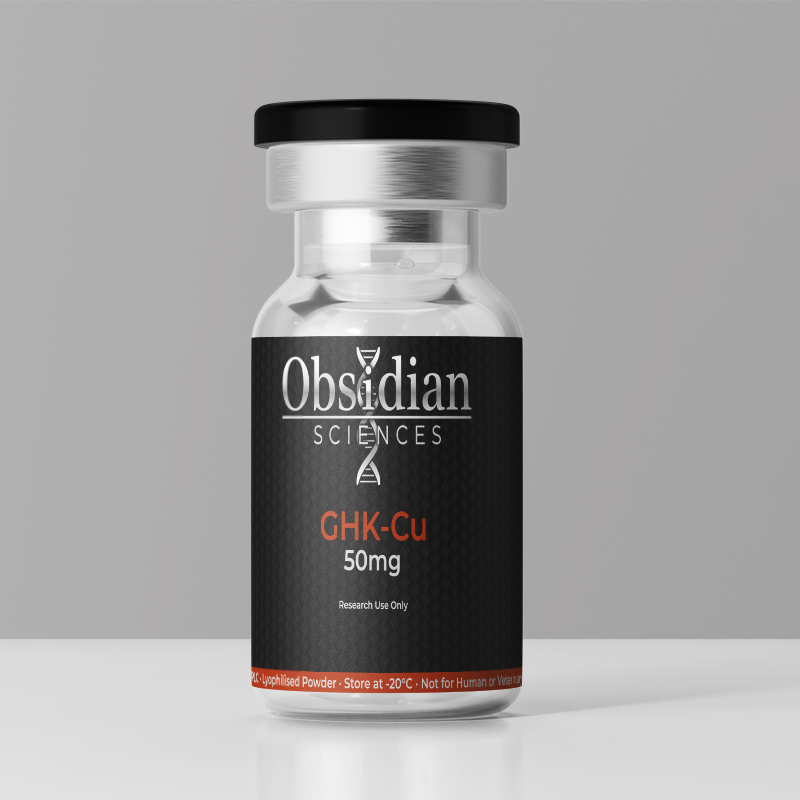
GHK-Cu 50mg
£16.99
GHK-Cu – 50mg lyophilised powder, research grade. Naturally occurring human tripeptide-copper complex for in-vitro research use only.
Out of stock
For In-Vitro Research Use Only. Not for human consumption, veterinary use, or clinical application. No dosing guidance is provided or implied.
GHK-Cu (glycyl-L-histidyl-L-lysine:copper(II)) is a naturally occurring human tripeptide with a high affinity for copper(II) ions. It was first isolated from human plasma in 1973 by Dr. Loren Pickart, who observed that albumin fractions containing GHK caused older human liver tissue to synthesise proteins characteristic of younger tissue.
GHK is present in human serum at approximately 200 ng/ml at age 20, declining to approximately 80 ng/ml by age 60. This age-dependent decline has made it a subject of interest in research examining age-associated changes in tissue remodelling and gene expression.
Genomic studies have identified GHK-Cu as a modulator of over 4,000 human genes, approximately 6% of the human genome. Key pathways affected include collagen and glycosaminoglycan synthesis (upregulated), inflammatory and fibrotic pathways (downregulated), and extracellular matrix remodelling processes.
Preclinical research has investigated GHK-Cu across models of wound healing, tissue remodelling, inflammatory signalling, oxidative stress, and neurodegeneration. Identified mechanisms include stimulation of blood vessel and nerve outgrowth, increased collagen and elastin synthesis, and inflammatory pathway modulation via NF-kB and p38 MAPK signalling.
A 2025 study evaluated GHK-Cu in a DSS-induced mouse model of ulcerative colitis, identifying SIRT1 as a likely direct binding target and demonstrating regulation of the SIRT1/STAT3 signalling pathway.
For In-Vitro Research Use Only. Not for human consumption, veterinary use, or clinical application. No dosing guidance is provided or implied.
| Sequence | GHK (Gly-His-Lys) |
| CAS Number | 49557-75-7 |
| Molecular Formula | C14H24N6O4.Cu |
| Molecular Weight | 403.93 g/mol |
| Purity | >=98% HPLC |
| Form | Lyophilised powder |
| Vial Size | 50mg |
| Storage | -20C (lyophilised); 2-8C (reconstituted) |
Peer-reviewed published research underpins every compound in our catalogue. All products are supplied strictly for research use only.
Related products